Giving plastic new purpose.Pithampur, Dhar · Madhya Pradesh, India
RECYCLEANPolymers Private Limited
Contact
Home / Quality & testing
Quality & testing

Understand the material. Validate the grade.

From melt flow to mechanical performance, each check answers a different question about recycled PP and PE. Explore the equipment, the testing approach and what the results tell us.

Tests & laboratory equipment

A closer look at every check.

Our test plan is developed around the material and the customer’s application. Images are illustrative; test availability, methods and acceptance criteria are confirmed with each requirement.

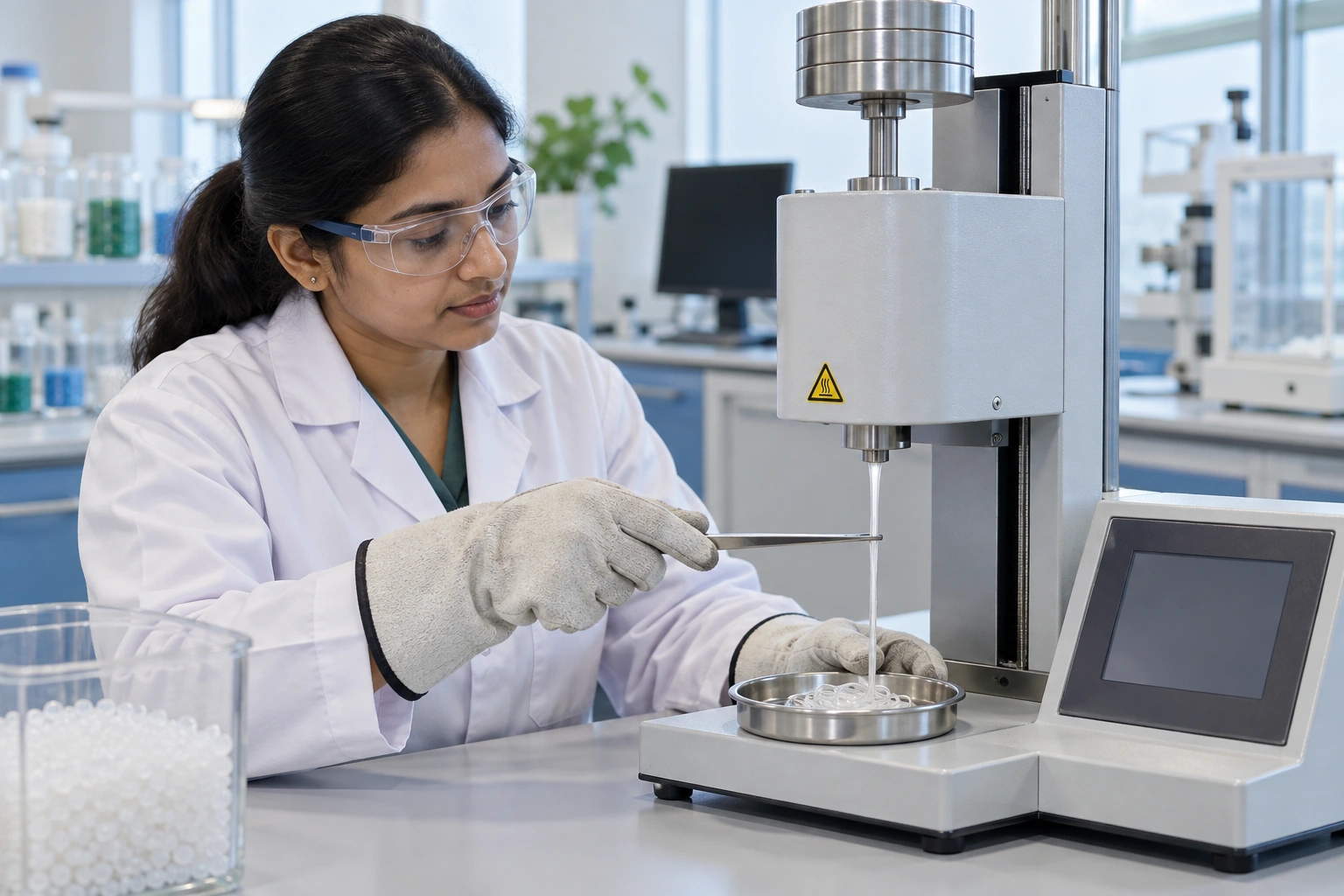
Illustrative technician collecting a polymer sample from a melt flow index tester
Illustrative testing scene
Flow behaviour01

Melt flow index (MFI / MFR)

EquipmentMelt flow index tester

How it works

A polymer sample is heated in a barrel and pushed through a small die under a specified load. The extruded material is collected and weighed over a defined time.

What it tells us

Shows how readily the melt flows. Compare results using the same temperature and load when discussing a grade for extrusion or moulding.
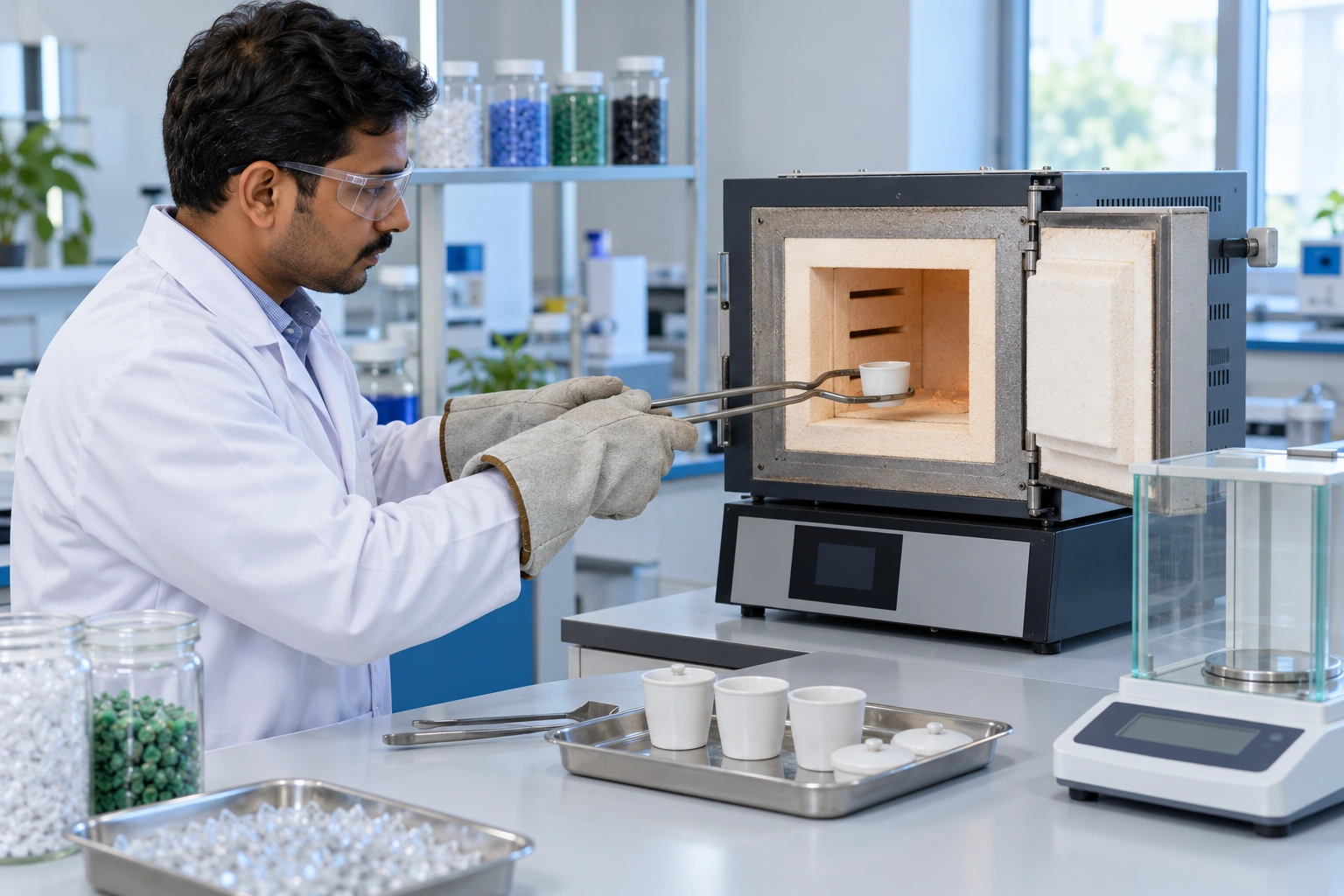
Illustrative laboratory technician handling a ceramic crucible at a muffle furnace with tongs
Illustrative testing scene
Residual mineral content02

Ash content

EquipmentMuffle furnace, crucibles & analytical balance

How it works

A weighed sample is heated in a crucible under an agreed test method. After cooling, the remaining ash is weighed against the original sample.

What it tells us

Indicates the non-combustible residue, which can include mineral fillers. It does not identify every filler or measure all types of contamination.

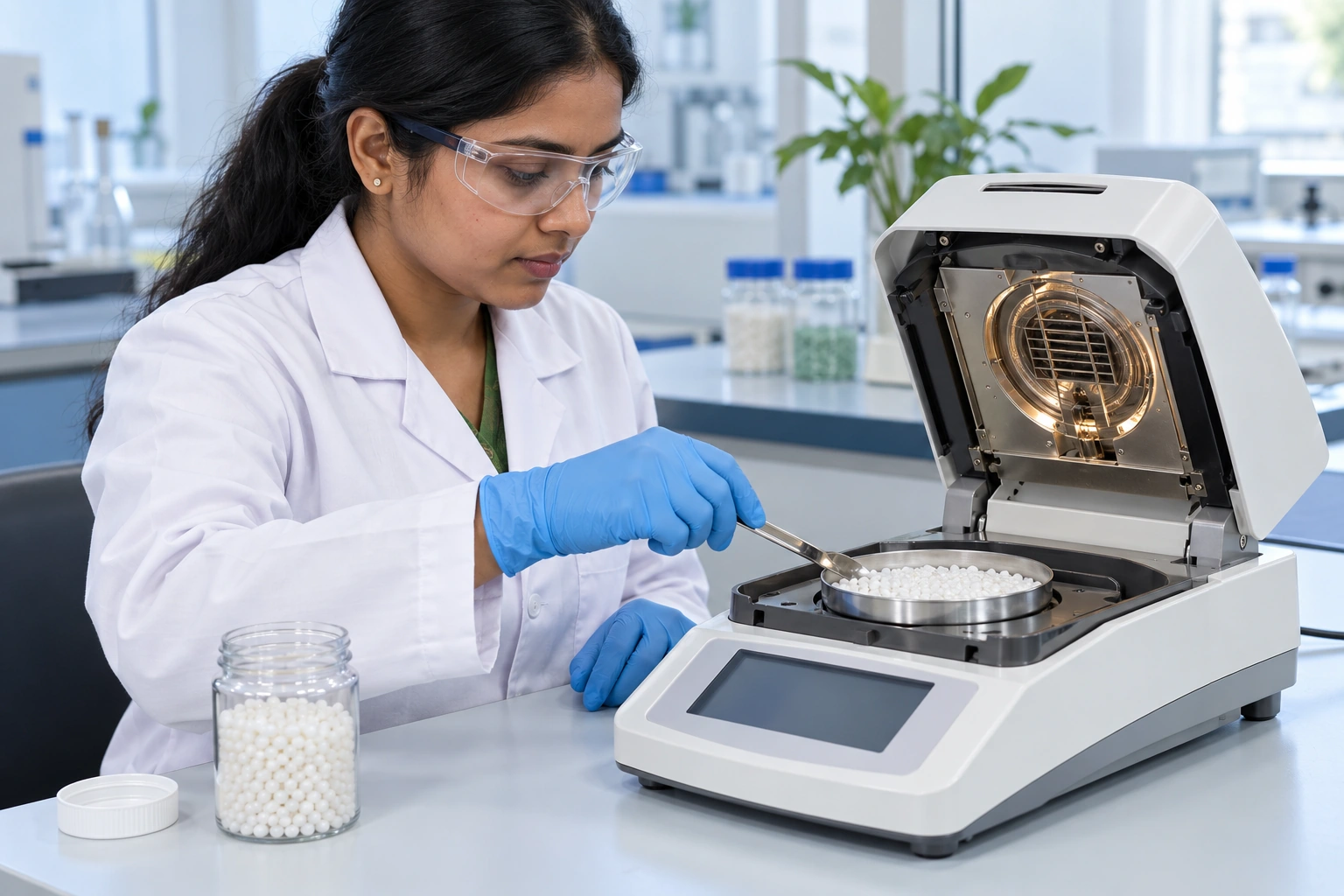
Illustrative technician spreading plastic pellets in the sample pan of a halogen moisture analyser
Illustrative testing scene
Material condition03

Moisture screening

EquipmentHalogen moisture analyser

How it works

Pellets are spread in a sample pan and heated while the instrument tracks weight loss. The heating programme is chosen for the material.

What it tells us

Helps assess drying needs and material consistency. Loss on drying can include other volatiles; a water-specific method can be agreed when required.

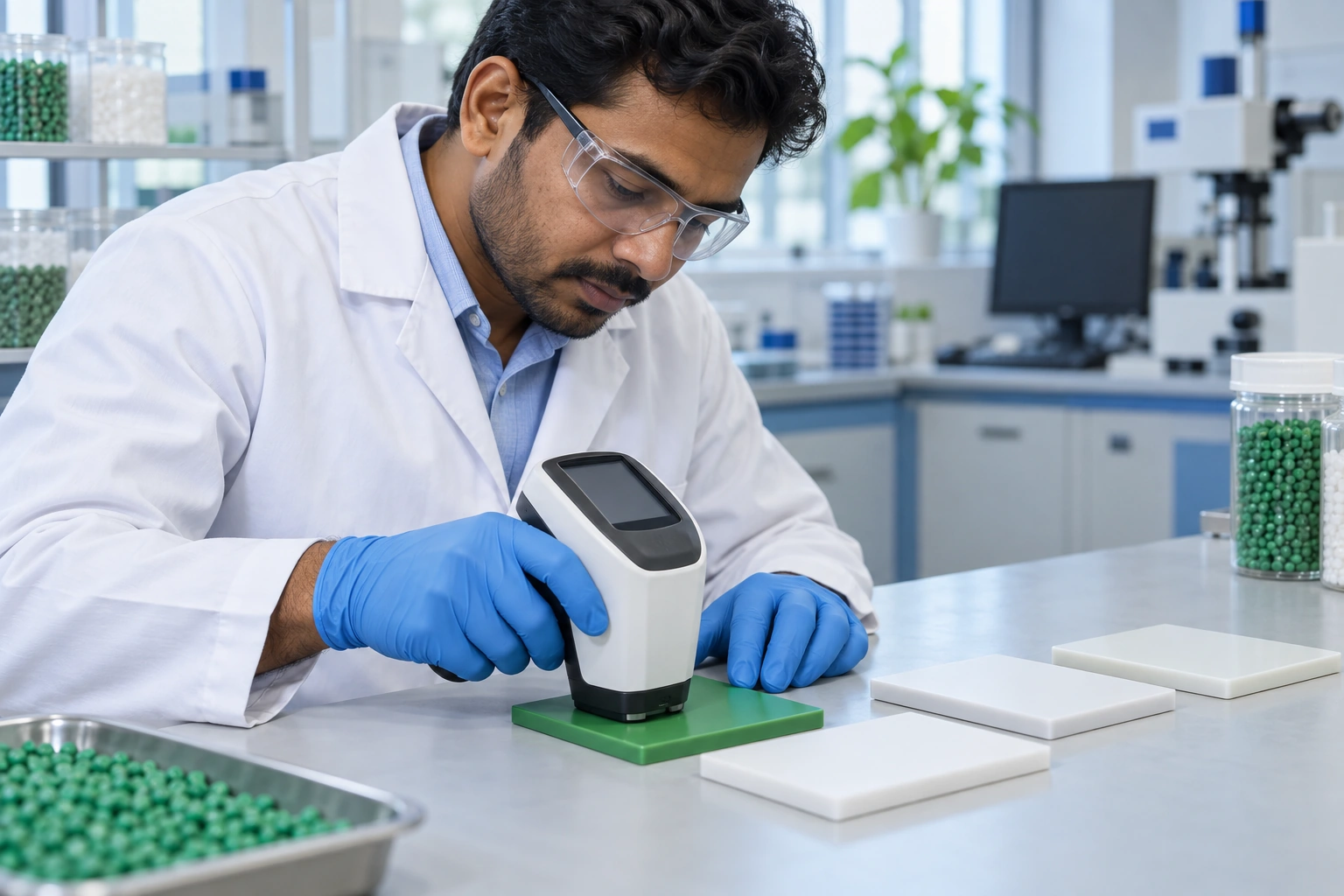
Illustrative technician measuring a moulded polymer plaque with a colour measurement instrument
Illustrative testing scene
Visual consistency04

Colour & appearance

EquipmentSpectrophotometer & prepared sample plaques

How it works

A consistently prepared plaque is compared with an agreed colour reference using an instrument and controlled visual inspection. Specks and surface defects are also checked.

What it tells us

Helps compare shades between lots. Sample preparation and surface finish are kept consistent because pellet colour and finished-part colour can differ.

Illustrative technician inspecting a woven metal filter mesh with a stereo optical microscope
Illustrative testing scene
Filtration verification05

Filter screen inspection

EquipmentOptical microscope & filter-screen samples

How it works

Screen samples are examined for their weave, condition and openings using suitable optical measurement. Screen details are checked against the agreed filtration requirement.

What it tells us

Supports screen selection and traceability. Mesh count and opening size are recorded separately; screen inspection alone does not establish finished-granule cleanliness.

Illustrative technician setting up a plastic dumbbell specimen in a universal tensile testing machine
Illustrative testing scene
Strength under tension06

Tensile strength & elongation

EquipmentUniversal testing machine

How it works

A prepared test specimen is gripped at both ends and pulled at a controlled rate. The machine records the force and the specimen’s extension.

What it tells us

Shows resistance to pulling and how far the material stretches before breaking. Results depend on specimen preparation and the agreed test conditions.

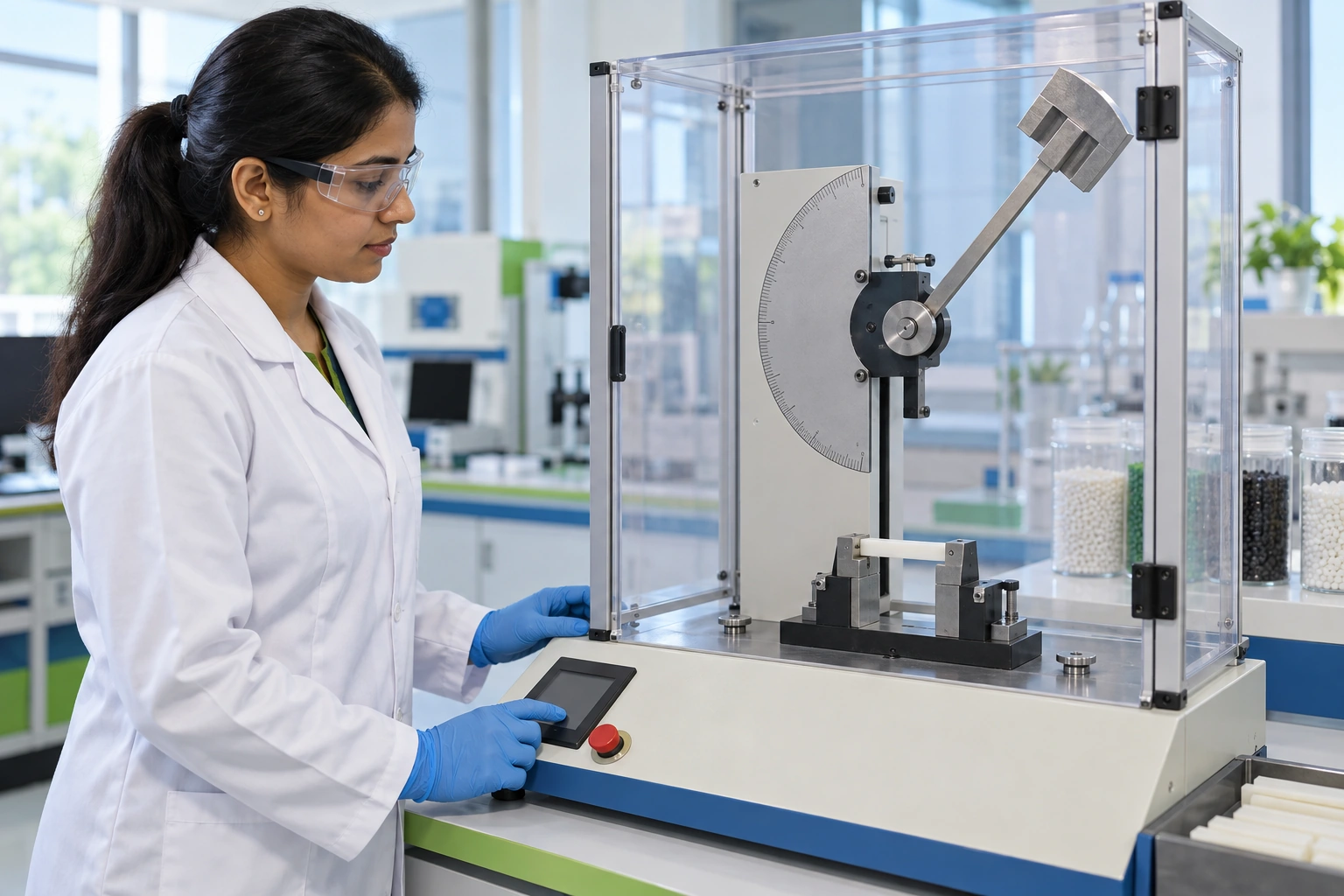
Illustrative technician preparing a guarded pendulum impact tester for a plastic test bar
Illustrative testing scene
Response to a sudden load07

Impact resistance

EquipmentPendulum impact tester

How it works

A pendulum strikes a prepared plastic specimen and the instrument measures the energy absorbed. The test method and notched or unnotched condition are agreed in advance.

What it tells us

Helps compare resistance to sudden impact. Results are assessed using the same specimen type, conditioning and test arrangement.

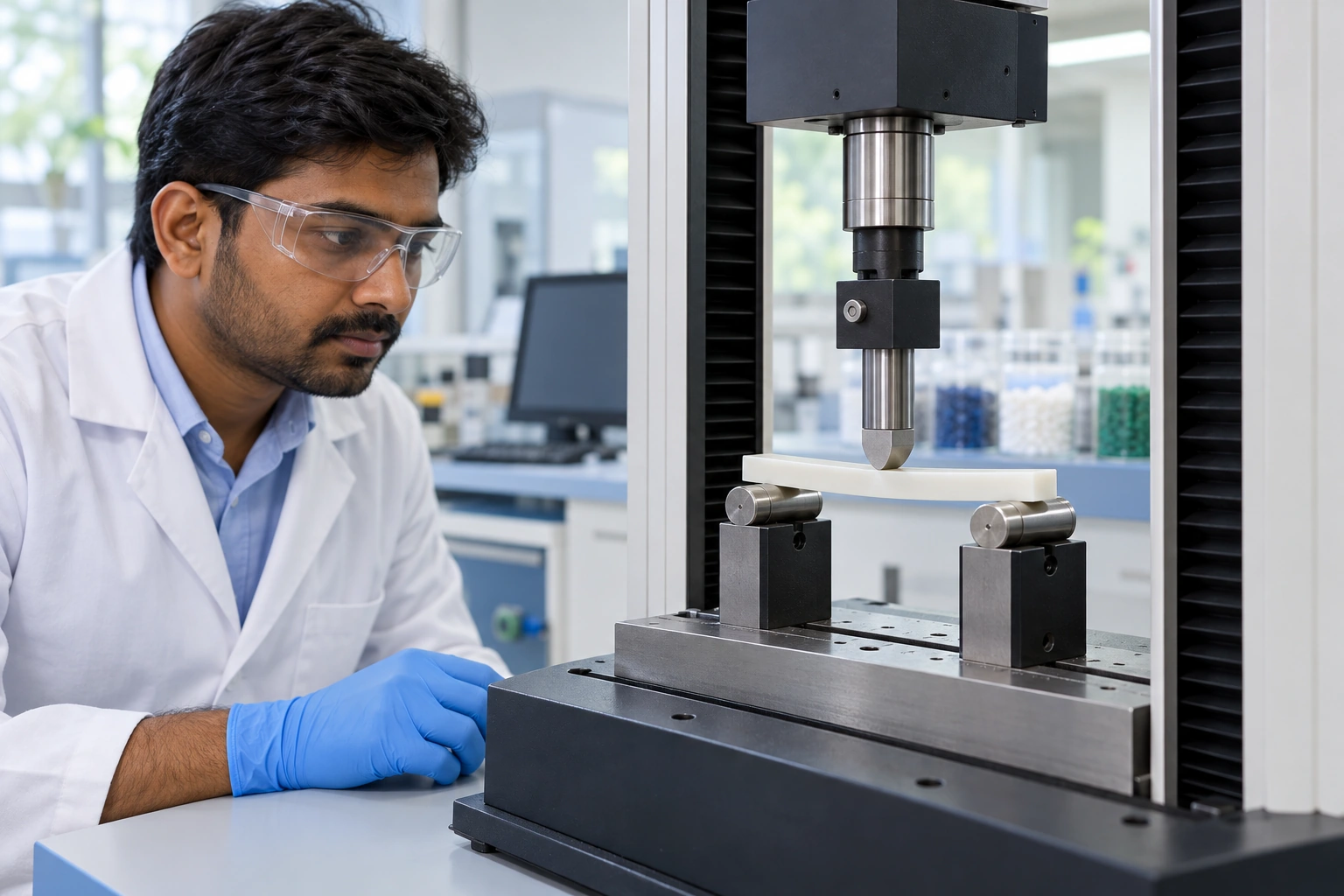
Illustrative technician observing a plastic bar on a three-point bending test fixture
Illustrative testing scene
Resistance to bending08

Flexural stiffness

EquipmentUniversal testing machine with bending fixture

How it works

A rectangular specimen rests on two supports while a central loading nose bends it. The instrument records the force and deflection.

What it tells us

Indicates how rigidly the material behaves in bending. It helps evaluate grades for products that need to retain their shape under load.

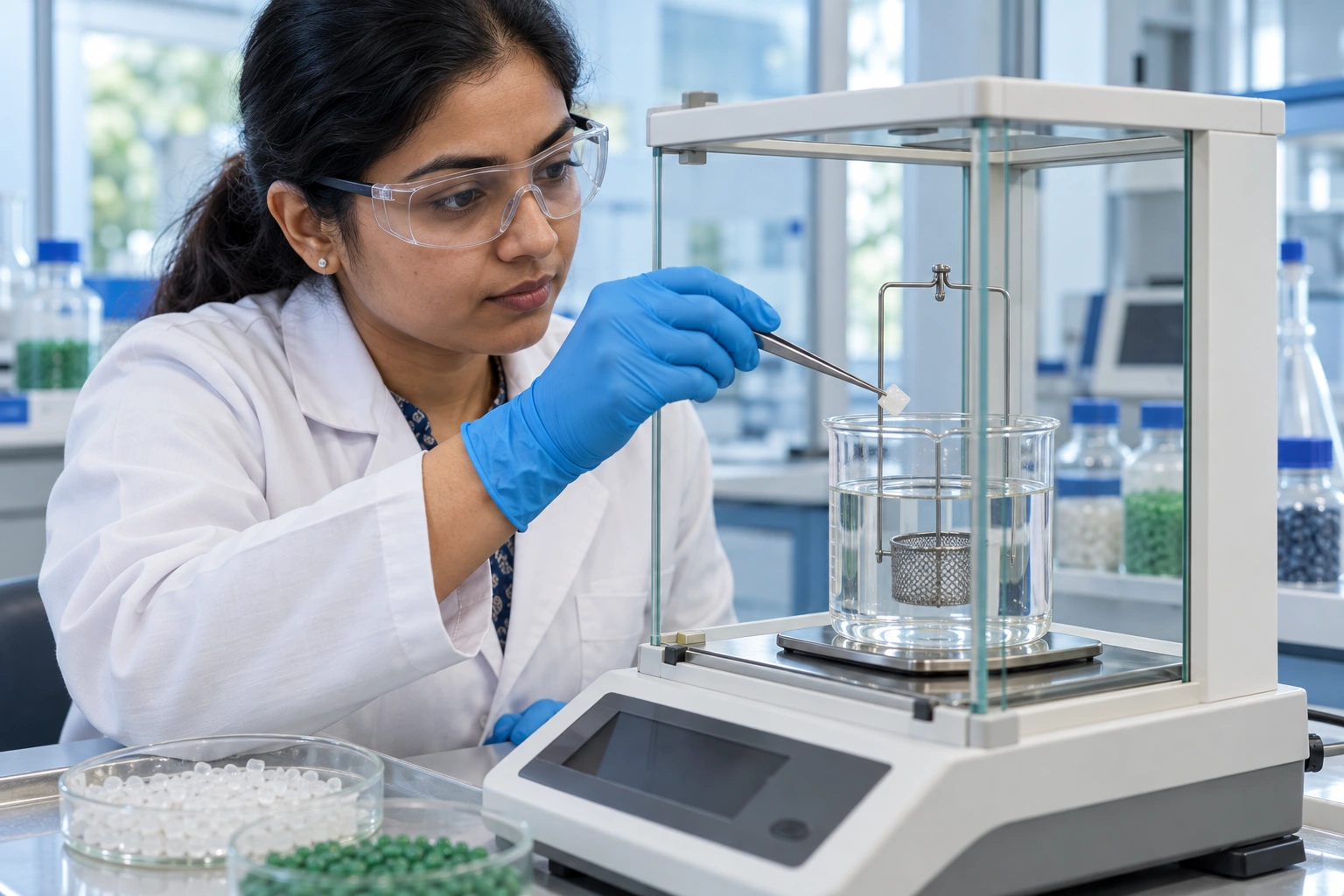
Illustrative technician using a balance density kit with a polymer sample and liquid immersion holder
Illustrative testing scene
Material consistency09

Density

EquipmentPrecision balance with density kit

How it works

A prepared sample is weighed in air and in a suitable liquid using a density kit. Liquid temperature and a suitable holder for floating samples are considered.

What it tells us

Helps compare material consistency and changes in composition. Density supports the assessment but does not identify a polymer blend on its own.

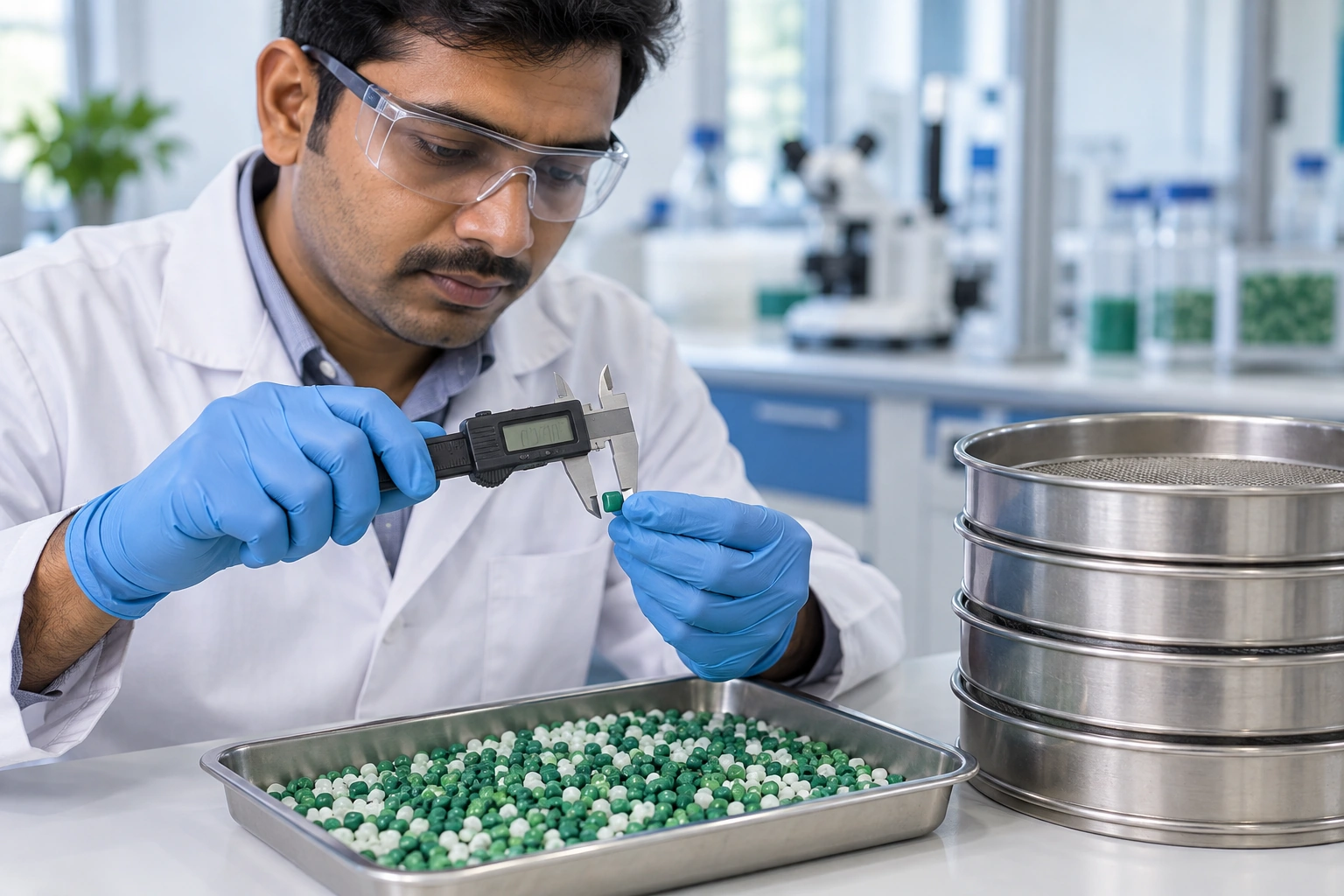
Illustrative technician measuring a recycled plastic pellet with a digital calliper beside test sieves
Illustrative testing scene
Granule form10

Pellet size & fines

EquipmentDigital calliper, inspection tray & test sieves

How it works

Representative pellets are inspected and measured for size and shape. Sieving separates fine particles from the main granule sample.

What it tells us

Helps assess pellet uniformity and the presence of fines, both relevant to handling and feeding. Acceptance criteria follow the buyer’s process.

Planned quality checkpoints

Incoming material. Process. Finished lot.

Incoming assessment

Review source information, segregation, declared composition and visible contamination. Identify and retain lot information.

Process control

Define the approved recipe and record the relevant feeding, dosing, extrusion and filtration settings.

Lot evaluation

Agree sampling, test methods and acceptance limits. Provide the confirmed results and documents applicable to the transaction.

Let’s move materials forward

Your waste. Your requirement.
Our next conversation.

Connect with our team in English or Hindi.